things to do in Split, Croatia
The best things to do in Split, Croatia include exploring the UNESCO-listed Diocletian’s Palace, hiking Marjan Hill, visiting Klis Fortress, and island-hopping to Hvar and Vis. Most of these sights sit within easy walking distance of each other, making Split one of the best places to visit in Croatia for both first-timers and returning travelers.
Split, Croatia’s second-largest city, sits on the Dalmatian coast and packs Roman ruins, Adriatic beaches, island day trips, and a buzzing food scene into one remarkably compact destination.
Split doesn’t announce itself the way Dubrovnik does. There are no coach-tour queues blocking every viewpoint, no feeling that you’re moving through a perfectly preserved film set. What Split offers instead is something rarer — a city where 1,700-year-old Roman walls share space with coffee shops, local laundry, and the smell of grilled fish. Roughly 3,000 people still live inside Diocletian’s Palace. That fact alone tells you everything about what kind of place this is.
Croatia consistently ranks among Europe’s most sought-after destinations, and Split sits at the heart of why. As one of the best places to visit in Croatia, it functions as both a destination in its own right and an ideal base for exploring the wider Dalmatian region. Day trips to Krka waterfalls, the islands of Hvar and Vis, and even Mostar in Bosnia and Herzegovina are all within reach. But the city itself earns more than a quick stopover. Most travelers recommend staying at least two to three full days — and many end up wishing they had booked longer.
This guide covers the best things to do in Split Croatia, from its most important historical sites and unique local experiences to day trips and practical planning tips. Whether you’re a first-timer or returning for a second look, here’s how to make the most of one of the Adriatic’s most captivating cities.
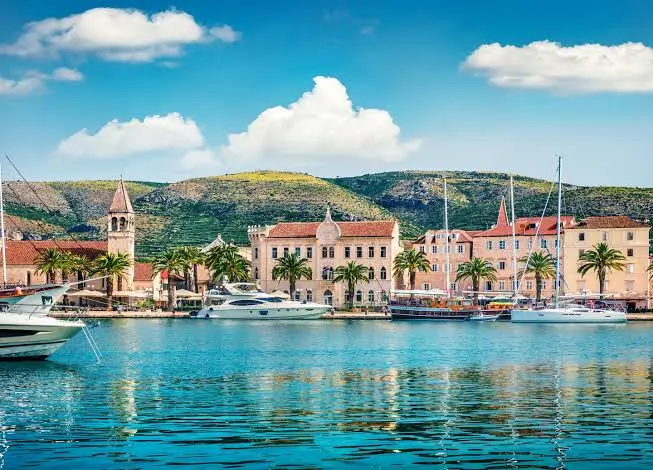
Table of Contents
What Makes Split One of the Best Places to Visit in Croatia?
Split is one of the best places to visit in Croatia because it combines lived-in Roman history, walkable Old Town sights, easy island access, and an authentic local atmosphere that many more polished destinations lack.
Split is Croatia’s second-largest city, situated on the Dalmatian coast along the Adriatic Sea. Unlike Dubrovnik, which can feel more polished and tourist-oriented, Split retains the texture of a real working city. Locals go about their daily lives within and around the ancient palace walls, giving the city an energy that’s hard to manufacture.
The practical case for visiting is strong. Most of the key sights are clustered in or around the Old Town, making it a very walkable destination. English is widely spoken in tourist areas, the currency is the Euro, and the city is generally considered very safe. Tap water is safe to drink, and Uber is available alongside a local bus network for getting around.
Timing matters. Split is primarily a summer destination — much of the city’s tourist infrastructure winds down after October. That said, shoulder season (May–June and September–October) is often the sweet spot: warm weather, manageable crowds, and a more authentic local atmosphere. If you visit in October, as some experienced travelers do, you’ll find a quieter, unhurried version of the city that has its own particular charm.
What Are the Must-See Historical Sites in Split, Croatia?
The must-see historical sites in Split are Diocletian’s Palace, Klis Fortress, the Cathedral of St. Domnius and its bell tower, and the Roman ruins at Salona. Together they trace Split’s history from the ancient capital of Dalmatia to a living Roman-era Old Town.
Diocletian’s Palace — the Roman emperor’s retirement home you can walk through for free
Built by the Roman Emperor Diocletian in the late third century as his personal retirement palace, Diocletian’s Palace is a UNESCO World Heritage Site and, essentially, Split’s entire Old Town. The structure covers around 30,000 square meters, and much of it can be explored for free.
What makes the palace extraordinary isn’t just its scale — it’s how thoroughly the city has grown into it. Bars, restaurants, apartments, and churches have been built directly into the ancient Roman walls. To walk through it is to move through layers of history that are still very much in use.
Paid sections include the substructure — a vast vaulted basement that was reportedly used in Game of Thrones as Daenerys’ dragon lair. It’s worth the entrance fee for a sense of how the palace was originally structured. Plan at least a half day here, and consider an evening visit when the stone corridors are lit up and far less crowded.
Klis Fortress — the Game of Thrones filming location with views worth the climb
Perched on a limestone bluff about 10 minutes outside of Split, Klis Fortress offers some of the most dramatic views in the region. Looking down onto the city and the Adriatic beyond, it’s an easy case for why this defensive stronghold changed hands so many times — between Romans, Croatians, Ottoman Turks, and Venetians. Tickets cost around €12 for adults.
Game of Thrones fans will recognize it as Meereen, where Daenerys freed the enslaved. Even without that connection, the fortress is worth visiting for its genuine historical weight. Wear good shoes — the uneven stone surfaces are part of the defensive design and can be slippery.
Cathedral of St. Domnius and the Bell Tower — best view in the Old Town
The Cathedral of St. Domnius, built within Diocletian’s mausoleum, is one of the oldest Catholic cathedrals in the world still in use. The adjacent bell tower is the main draw for many visitors: from the top, you get an unobstructed 360-degree view of the Old Town, the harbor, and Marjan Hill. Tickets to the tower can typically be purchased at the tourist office in the Peristil square.
The Roman Ruins at Salona — the city before the palace
Before Diocletian’s Palace, there was Salona — the ancient capital of the Roman province of Dalmatia. Located on the outskirts of modern Split, the site includes excavated forums, early Christian basilicas, and a small museum dedicated to the earliest archaeological discoveries. It’s reachable by public bus, though joining a small-group tour is recommended given the limited on-site signage.
What Are the Best Outdoor Activities and Sights in Split?
The best outdoor activities in Split include hiking Marjan Hill for panoramic views, watching the sunset from Sustipan park, and relaxing at Bačvice Beach, the city’s only sandy beach.
What is there to do on Marjan Hill, and is it worth the hike?
Yes, Marjan Hill is worth the hike. The trail takes around 45 minutes to reach the summit and rewards you with exceptional views over the Old Town, harbor, and Adriatic.
Marjan Hill is a large, forested peninsula that juts out to the west of the Old Town. It’s one of the most rewarding things to do in split croatia for those who want a break from cobblestones and café terraces. The main hiking trail starts at steps near Pizzeria Bokamorra (labeled “Marjan Hill Stairs” on Google Maps).
Along the way, look for the Oratory of sv. Cyriaka — a medieval hermitage tucked behind a picturesque church that most visitors walk straight past. There’s also a café halfway up, and the Marjan Peninsula itself is home to several beaches, including Kasjuni Beach, which is generally less crowded than Split’s central beaches.
Sustipan — Split’s quietest sunset spot
Tucked behind the boatyard and past the Riva, Sustipan is a small park on the cliffs at the edge of the Varoš neighborhood with sweeping views of the Adriatic and Marjan Hill. The site has roots in a medieval Benedictine monastery and later served as a 19th-century cemetery before being converted into a park after World War II. Grab takeout from the nearby Skipper Pizzeria and watch the sun go down over the water. It’s one of the most peaceful spots in the city and one that most tourists miss entirely.
Bačvice Beach — Split’s only sandy beach
Most Croatian beaches are pebble, which makes Bačvice Beach — a short walk east of the Old Town — something of a local institution. The sandy shore is popular with families, and it’s the home of Picigin, a traditional Croatian ball game played in shallow water. Beach bars and cafés line the promenade. On summer evenings, the outdoor cinema Kino Mediterranean runs screenings right by the beach starting at 9:30pm.
What Unique and Offbeat Experiences Can You Have in Split?
Split’s most unique experiences include the Froggyland taxidermy museum, rubbing the toe of the Gregory of Nin statue for luck, drinks at the Marvlvs Library Jazz Bar, and a nighttime glow paddleboard tour on the Adriatic.
Froggyland — the bizarre taxidermy museum you have to see to believe
Froggyland is exactly what it sounds like: a museum filled with stuffed frogs posed in human scenarios. It’s strange, it’s delightful, and it doesn’t allow photographs inside — which somehow makes the whole experience even more memorable. Entrance is around €9. Whether you find it charming or unsettling, you won’t forget it.
Rub the toe of Gregory of Nin for good luck
Just outside the Golden Gate of Diocletian’s Palace stands a giant bronze statue of Bishop Gregory of Nin, sculpted by the celebrated Croatian artist Ivan Meštrović. Gregory advocated for church services in the Croatian language instead of Latin, making him a local hero. His big toe has been rubbed shiny by generations of visitors — tradition holds that touching it brings good luck and guarantees a return to Split.
Marvlvs Library Jazz Bar — wine in one of Split’s oldest spaces
Housed in a building associated with the founder of Croatian literature, Marvlvs Library Jazz Bar is a tiny, atmospheric spot with floors that are original to Diocletian’s Palace. The menu is presented as a book of literary quotes in multiple languages. It’s one of the rare places that fully earns its hype.
Nighttime SUP tour — glowing paddleboards on the Adriatic
For something genuinely different, a night SUP (stand-up paddleboard) tour from Stobrec Beach is one of the most memorable activities available in Split. The paddleboards are lit underneath with LED lights, creating an ethereal glow as you move across the water at sunset. It’s become one of the most highly praised experiences among visitors who book it.
Split Virtual Reality Experience — Diocletian’s Palace as it was in the 4th century
Frequently voted one of the top activities on TripAdvisor, the Diocletian’s Dream VR experience lets you explore the palace as it looked when fully intact in the 4th century AD. For those who want to understand what they’re actually walking through in the Old Town, this provides a vivid frame of reference.
What Are the Best Day Trips from Split, Croatia?
The best day trips from Split are island-hopping to Hvar, Vis, and the Blue Cave; Krka Waterfalls; the UNESCO town of Trogir; Mostar in Bosnia and Herzegovina; and Brač Island. Split’s location on the Dalmatian coast makes it one of the best bases for day trips in the entire country.
Island hopping to Hvar, Vis, and the Blue Cave is a consistently popular choice. Speedboat tours typically cover multiple islands in a single day, including a visit to the Blue Cave on the island of Biševo — an otherworldly sea cave where sunlight refracts off the white sand seabed to create an electric blue glow. Swimming inside the cave is no longer permitted, but a small boat ride through it is still a remarkable experience.
Krka Waterfalls offer a closer and more accessible alternative to Plitvice Lakes National Park. The park’s centerpiece, Skradinski Buk, is a cascading series of waterfalls set within lush forest — extraordinary to walk through. Note that swimming in the waterfall area is no longer permitted, though designated swimming areas exist nearby. Pairing the visit with a stop in the charming riverside town of Skradin makes for a full day.
Trogir, a UNESCO-listed town about 30 minutes from Split, is worth a half-day visit for its dense concentration of medieval architecture on a small island connected to the mainland by bridge. The Old Town is compact enough to wander without a plan.
Mostar in Bosnia and Herzegovina is a longer trip — roughly two hours each way — but one that many travelers describe as among the most impactful they take from Split. The reconstructed Stari Most bridge and the mix of Ottoman and Mediterranean architecture make it unlike anywhere else in the region. Avoid visiting in the peak of summer heat, as Mostar is among the hottest cities in Europe during July and August.
Brač Island, most famous for Zlatni Rat (Golden Horn Beach), is easily accessible by ferry and combines beach time with the option to hike to Vidova Gora, the highest peak on any Adriatic island.
What Are the Best Places to Eat and Drink in Split?
Split’s food highlights include the Green Market for fresh produce, Art Pâtisserie & Luka Ice Cream, Storija for a meal inside the Old Town walls, and sunset drinks along the Riva promenade.
The Green Market, open daily except Sunday, is worth a visit on a Saturday morning when it’s at its most vibrant. Bring cash and some patience — weekday afternoons skew heavily toward tourists.
For ice cream, Art Pâtisserie & Luka Ice Cream near Imperium Caesar square is a genuine destination. The rotating flavors, including unusual combinations like chocolate lavender, have earned it an enthusiastic following among both locals and visitors.
Storija, the only restaurant actually located inside the Old Town walls, is worth seeking out for both its vaulted stone interior and its locally-sourced Croatian menu. It sits on the Riva but is easy to walk past without knowing it’s there.
Sunset drinks on the Riva itself remain one of the great simple pleasures of visiting Split. Whether you take a table at one of the waterfront cafés or bring your own drink to the West Bank area, watching the city slow down at dusk has a particular magic.
Practical Tips for Visiting Split, Croatia
Key practical tips for Split: wear shoes with grip on the slippery Roman paving, stay central near the Old Town, watch for aggressive drivers, prepare for extreme summer heat, and book popular day trips well in advance.
- Footwear matters. The ancient Roman paving stones in the Old Town are beautiful and legitimately slippery, especially after rain. Wear shoes with grip.
- Stay central. Most key sights are within the Grad (City Centre) pedestrian zone and within easy walking distance of each other. There’s no strong reason to stay far from the Old Town.
- Drivers are aggressive. The pedestrian zones are wonderfully car-free, but exercise real caution when crossing streets.
- Heat in summer is significant. Split can reach extreme temperatures in July and August. Sunscreen and water are essential, particularly when hiking.
- Book day trips in advance. Popular tours — island hopping, Krka, and Mostar especially — fill up quickly during peak season.
Plan Your Trip to Split
Split rewards travelers who slow down. The best version of a visit here isn’t a sprint through the palace checklist — it’s a morning at the Green Market followed by a slow afternoon at Sustipan, a jazz bar in the evening, and a day trip to the islands when the weather cooperates. The history is everywhere and mostly free to wander through. The food is exceptional. The Adriatic is right there.
Whether you’re planning a week in Croatia or treating Split as the anchor for a longer Dalmatian road trip, this is a city that holds up to extended exploration. Two to three days covers the essentials; a week barely scratches the surface.
Frequently Asked Questions About Things to Do in Split, Croatia
How many days do you need in Split, Croatia?
Most visitors recommend a minimum of two to three full days in Split. One day is enough to cover the main sights around Diocletian’s Palace, but two to three days allows you to also explore Marjan Hill, Klis Fortress, the local food and drink scene, and at least one day trip. Those who plan to use Split as a base for multiple day trips — to Krka, the islands, or Mostar — should consider staying four to five nights.
Is Split or Dubrovnik better to visit in Croatia?
Both cities are worth visiting, and the right choice depends on what you’re looking for. Dubrovnik is more visually dramatic and compact but significantly more touristy and expensive. Split is larger, more lived-in, and offers better access to day trips and adventure activities. Split is generally the better base for exploring the broader Dalmatian region. If your itinerary allows it, visiting both is entirely possible within a week.
What is the best time of year to visit Split, Croatia?
The shoulder seasons — May through June and September through October — offer the best combination of warm weather, manageable crowds, and lower prices. Peak summer (July–August) brings intense heat, maximum tourist numbers, and higher accommodation costs. October is particularly pleasant for those who want a quieter, more local experience, though some seasonal businesses begin to close.
Is Diocletian’s Palace free to visit in Split?
Much of Diocletian’s Palace can be explored for free, including the main Peristil square, the Golden Gate, and many of the streets within the Old Town itself. Paid sections include the palace substructure (basement vaults), the Cathedral of St. Domnius, and the bell tower. Admission prices vary by section and combination ticket.
What is the best day trip from Split, Croatia?
Island hopping to Hvar, Vis, and the Blue Cave is the most popular day trip from Split, Croatia. For those who prefer a nature-focused experience, Krka Waterfalls is the most accessible option and consistently rated highly. Mostar in Bosnia and Herzegovina is recommended for travelers interested in culture and history, though it requires a longer travel day. Trogir is the easiest half-day option, suitable even for those with limited time.
Is Split safe for solo travelers?
Split is widely considered one of the safer cities in the Mediterranean for solo travel, including for solo female travelers. Standard precautions apply — particularly at night and in areas away from the well-lit pedestrian zones — but overall crime rates are low. The main tourist areas are well-populated and generally well-monitored.
What is the best thing to do in Split if you only have one day?
With a single day in Split, prioritize Diocletian’s Palace — both the free areas and the paid substructure. From there, climb the Cathedral bell tower for panoramic views, walk the Riva promenade, and make time for Marjan Hill at sunset. If you have energy remaining, Froggyland and the Gregory of Nin statue can each be squeezed in without too much additional time.
How do you get around Split, Croatia?
Split’s Old Town and main sights are best explored on foot, as the historic center is a car-free pedestrian zone. For destinations farther out, such as Klis Fortress or the beaches, Uber and a local bus network are both available and reliable.
What currency is used in Split, and is English spoken?
Split uses the Euro, and English is widely spoken in tourist areas, restaurants, and hotels. Carrying some cash is useful for the Green Market and smaller vendors, where card payment isn’t always accepted.