Best Croatia Waterfalls & Plitvice Lakes : Complete 2026 Guide
Croatia is famous around the world for its stunning natural beauty, and nothing showcases this better than its waterfalls. The crown jewel is Plitvice Lakes National Park, a UNESCO World Heritage site where thousands of Croatia waterfalls cascade over mossy rocks into turquoise lakes. If you are planning a trip and wondering which waterfalls in Croatia you cannot miss, this guide will help you plan the perfect visit.
Plitvice Lakes is not just one waterfall — it is a collection of 16 terraced lakes connected by almost 100 individual waterfalls, big and small. The park is one of the best places to visit in Croatia and a must-see for nature lovers. In this article, we will cover everything you need to know about visiting Plitvice and the other beautiful Croatian waterfall parks.
Plitvice Lakes National Park Overview
Plitvice Lakes National Park is located in central Croatia, roughly halfway between Zagreb and Zadar. Founded in 1949, it was the first national park in the country and remains its most famous natural attraction. The park covers an area of about 297 square kilometers, with the lakes occupying around 2 square kilometers.
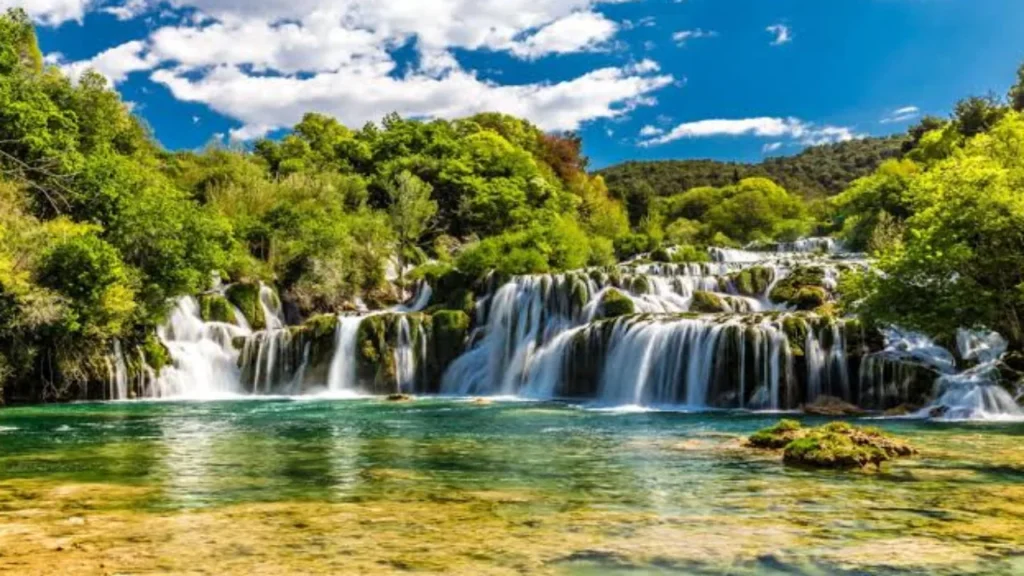
The park is built around 16 magnificent lakes that are divided into the Upper Lakes and the Lower Lakes. The water flows from one lake to the next, creating a stunning chain of waterfalls at Plitvicka Jezero National Park. The lakes range in color from deep blue to turquoise and green, depending on the minerals and sunlight. The water is so clear that you can see straight to the bottom.
Plitvice Lakes waterfalls in Croatia with turquoise water and wooden walkways
Why Plitvice is the Most Famous Croatia Waterfall Park
Plitvice has become the most famous waterfall park in Croatia for good reason. The combination of cascading waterfalls, crystal-clear lakes, and lush green forest creates a landscape that looks almost unreal. The park is protected by UNESCO, which recognizes its exceptional natural beauty and geological value.
The waterfalls at Plitvice are constantly forming and changing. The tufa stone created by the mineral-rich water grows slowly, changing the shape of the falls over time. Two of the largest and most famous waterfalls are the Great Waterfall (Veliki Slap), which drops about 78 meters, and Mirka, named after its founder Marko Butković. These are the waterfalls at Plitvicka Jezero National Park that visitors photograph the most.
How to Visit Croatia Waterfalls Plitvice Lakes
Visiting Plitvice requires some planning because the park attracts huge numbers of visitors, especially during summer. The park is open year-round, but the experience changes dramatically with the seasons. The best time to visit is spring and autumn when the water flow is highest and the crowds are smaller.
You need to book your tickets online in advance, especially if you visit between July and September. The park limits the number of daily visitors to protect the environment. Entry prices vary by season, with summer being the most expensive. Ticket prices typically range from 10 EUR in winter to 40 EUR in peak summer.
The park has two entrances — Entrance 1 (near the Great Waterfall) and Entrance 2 (near the Upper Lakes). Most visitors use Entrance 2 because it offers easier access to the boat ride and the most scenic trails. You should arrive early in the morning to avoid the busiest time of day.
Best Walking Routes at Croatia Waterfalls Plitvice
There are several walking routes through the park, ranging from short 2-hour walks to full-day adventures. The most popular route starts at Entrance 2 and combines a walk along the Upper Lakes with a boat ride across the main lake.
The “Program A” route starts at Entrance 2 and takes about 3 hours. It follows the Great Lake via the boat, then continues along wooden walkways to the Great Waterfall. The “Program B” route is slightly longer and includes the lower lakes. The “Program C” is the longest popular route, covering both the upper and lower lakes in about 6 hours. All routes are well-marked and easy to follow.
The wooden walkways are the highlight of the Plitvice experience. These boardwalks take you right to the edge of the plitvice lakes waterfalls, with water rushing beneath your feet. The sound of the falls combined with the forest smells creates a truly magical atmosphere.
Other Waterfalls in Croatia You Should See
While Plitvice is the most famous, Croatia has several other beautiful waterfall destinations. One of the best alternatives is Krka National Park, located near Šibenik in central Dalmatia. Krka is famous for the Skradinski Buk waterfall, a massive curtain of water that cascades over a wide limestone shelf.
Unlike Plitvice, Krka National Park allows swimming in certain areas during the summer months. The Skradinski Buk swimming area is a popular spot to cool off after exploring the park. Krka is also more accessible and cheaper than Plitvice, making it a good choice for families and budget travelers.
Krka National Park: What to Know
Krka National Park is about 15 kilometers north of the city of Šibenik. The park covers the Krka River and features 7 major waterfalls including Skradinski Buk. The park also has boat tours, walking trails, and a historic Franciscan monastery on Visovac Island.
The park attracts many visitors who use it as a day trip from Split or Zadar, both best places to visit in Croatia. The entrance fee is about 30 EUR in summer. The park’s main attraction, Skradinski Buk, spans about 800 meters in length and is one of the most spectacular waterfalls in Croatia after Plitvice.
Cetina River Springs and Waterfalls
The Cetina River in southern Dalmatia offers another stunning waterfall experience. The river’s source is a massive natural spring where a waterfall cascades over a cliff face. This area near Triilj is not as well-known as Plitvice or Krka but offers spectacular scenery without the crowds.
The Cetina River itself features canyons, caves, and smaller waterfalls along its course. Adventure travelers can go rafting or canoeing on the river. This is one of the unsung hidden gems among waterfall parks in Croatia.
Waterfalls on Croatia’s Islands
Many visitors are surprised to learn that Croatia also has waterfalls on its islands. On the island of Krk, the Bura beach area has a waterfall that flows directly into the sea. On Krka’s sister river system, Zupski kotlina falls near Brela are another example of the country’s natural beauty.
These island waterfalls are less dramatic than the mainland ones but offer their own charm as part of the coastline scenery. They remind us that waterfalls in Croatia can be found in many unexpected places.
Practical Tips for Visiting Croatian Waterfalls
When visiting Plitvice or other Croatia waterfalls, there are several practical tips to keep in mind. First, wear comfortable walking shoes with good grip. The wooden walkways can be slippery when wet. Second, check the weather forecast and dress appropriately — the park can be cool even in summer, especially in the mornings.
Third, bring water and snacks as food options in the park are limited and expensive. Fourth, arrive early to beat the crowds. The most popular walks start before 9 AM. Finally, be respectful of the environment — stay on the designated paths and take all your rubbish with you, as this fragile ecosystem is protected.
Where to Stay When Visiting Plitvice
The best option for visiting Plitvice is to stay in one of the villages just outside the park, such as Korenica or Mukinje. These villages have numerous guesthouses, apartments, and hotels at various price points. Staying nearby lets you reach the park gates early before the tour buses arrive.
Alternatively, you can combine Plitvice with a visit to Zagreb or Zadar. Both cities are about 2 hours away and offer a wider range of accommodation. Many travelers spend a day at Plitvice and then continue south toward Split and the islands, following many of the best places to visit in Croatia.
Frequently Asked Questions About Croatia Waterfalls
How many Croatia Waterfalls are in Plitvice Lakes?
There are approximately 90 waterfalls in Plitvice Lakes National Park. The Great Waterfall (Veliki Slap) is the highest at about 78 meters.
Is Croatia Waterfalls Plitvice or Krka better?
Both parks are worth visiting, but they offer different experiences. Plitvice is bigger and more spectacular, while Krka allows swimming and is closer to Split’s coast. If you only have time for one, choose Plitvice.
Can you swim in Plitvice Lakes?
No, swimming is not allowed in Plitvice Lakes to protect the delicate ecosystem. Swimming is permitted in some areas of Krka National Park instead.
How much time do you need at Plitvice?
Plan for at least 4-5 hours to see the main attractions. A full day (7-8 hours) is recommended if you want to take the longer routes and really take your time.
Plitvice Lakes is easily one of the best places to visit in Croatia. Combine your visit with a Croatia travel guide for planning, and check out our guide to Split if you are continuing down the coast.