The Best Places to Visit in Greece: 12 Unforgettable Destinations
Trying to decide where to go in Greece? Start with your travel style: Athens and Delphi for ancient history, Santorini and Mykonos for iconic island glamour, Milos and Naxos for quieter beaches, and Crete for a little bit of everything. Greece packs an incredible range of experiences into one country, which is exactly what makes choosing so hard—and so much fun!
With a mainland, the Peloponnese Peninsula, and thousands of islands scattered across the Aegean and Ionian Seas, Greece delivers turquoise waters, sun-soaked beaches, mountain trails, ancient ruins, and some of the best food in the Mediterranean. This guide breaks down the best places to visit in Greece, what each one is known for, and who it suits best, so you can build an itinerary you’ll love!
Table of Contents
How to Choose Where to Go in Greece
Greece rewards travelers who match their destinations to their interests. Here’s a quick way to narrow things down:
- For first-time visitors: Combine Athens with one or two islands (Santorini and Mykonos are the classic pairing).
- For history lovers: Athens, Delphi, Thessaloniki, and Crete deliver ancient sites at every turn.
- For beaches and nature: Milos, Naxos, and Crete offer stunning coastlines with fewer crowds than Santorini.
- For couples: Santorini’s sunsets are hard to beat, though Naxos and Nafplio are quieter romantic alternatives.
- For families: Crete and Naxos combine easy beaches, space, and plenty to do.
Most travelers spend 7 to 10 days in Greece, enough time to combine the capital with two or three other destinations. Add a few extra days if you want to island-hop at a relaxed pace.
Best Cities and Mainland Destinations in Greece
Mainland Greece is where ancient history feels most alive. These destinations are easy to combine and don’t require ferries or flights between islands.
Athens: The Historic Heart of Greece
Best for: First-time visitors, history buffs, food lovers
Recommended stay: 2 to 4 days
Athens is the essential starting point for most Greece itineraries, and it’s so much more than the Acropolis! Yes, the Parthenon and its hilltop views are unmissable—go at dusk when the marble glows golden—but the city also buzzes with street art, gallery-lined squares, and one of the liveliest food scenes in the country.
Wander the cobbled streets of the Plaka district, explore edgier neighborhoods like Gazi and Psirri for their murals, and take a food tour through the markets and tavernas for souvlaki, loukoumades, and a glass of retsina. When you need a break from the city, hop on a high-speed ferry to car-free Hydra, a charming island of boutiques, cliffside galleries, and quiet beaches.
Thessaloniki: Greece’s Cultural Second City
Best for: History and heritage, travelers who want fewer crowds
Recommended stay: 2 to 3 days
Athens has the Acropolis, but Thessaloniki counters with 15 UNESCO-listed sites, most within easy walking distance of one another. Greece’s second city is deeply layered, with Roman ruins, Byzantine churches, Ottoman-era buildings, and vibrant modern street art all sharing the same streets.
Follow in the footsteps of Alexander the Great at nearby Pella and Vergina, home to the marble tomb of Philip II. The city also holds a rich Jewish heritage spanning 2,000 years, best explored through its surviving pre-WWII synagogue and Museum of Jewish Heritage. Nearby, Mount Olympus—the mythical home of Zeus—offers forested hiking trails to waterfalls and a cliff-carved monastery.
Meteora: Monasteries in the Sky
Best for: Dramatic scenery, spiritual travelers, photographers
Recommended stay: 1 to 2 days
Few sights in Greece are as jaw-dropping as Meteora! Six Eastern Orthodox monasteries perch atop towering sandstone pinnacles that rise hundreds of feet above green valleys and the town of Kalabaka below. Built as far back as the 14th century, they feel almost impossibly remote and serene.
You can reach Meteora by train from Athens in around four hours, making it a doable add-on to a mainland trip. Climb the carved staircases to visit the monasteries, wander the surreal rock formations, and admire the Byzantine frescoes inside. Great Meteoron and Varlaam are standout stops.
Nafplio: Greece’s Most Elegant Small Town
Best for: Couples, weekend escapes, food and wine
Recommended stay: 2 days
With its Venetian architecture, seaside setting, and easy proximity to Athens, Nafplio is a favorite weekend retreat—and it makes a wonderful base for exploring the Peloponnese. Neoclassical mansions, Ottoman fountains, and cobbled streets tumble toward a turquoise bay, all watched over by the hilltop Palamidi Fortress.
Nafplio also sits close to some of Greece’s most important ancient sites. Visit the remarkable amphitheater at Epidavros, the Bronze Age ruins of Mycenae with its famous Lion Gate, or kayak above a sunken Roman villa. Wine lovers should make time for the Nemea region, one of the oldest wine areas in Greece.
Delphi: The Ancient World’s Most Sacred Site
Best for: History lovers, day-trippers from Athens
Recommended stay: 1 day (or an overnight)
Just two hours from Athens, Delphi was considered the center of the ancient world—the meeting point of Zeus’s two eagles and home to the famous Oracle. This UNESCO-listed site sits high on the slopes of Mount Parnassus, overlooking olive groves and dramatic peaks.
A guided visit brings the Sanctuary of Apollo, the ancient stadium, and the theater to life, and the on-site archaeological museum houses treasures like the Sphinx of Naxos. Nearby, the fishing town of Galaxidi and the scenic mountain resort of Arachova make lovely add-ons.
Best Greek Islands to Visit
The Greek islands are the reason so many travelers dream of Greece. Below are the standouts, from world-famous icons to quieter alternatives worth seeking out.
Santorini: Iconic Sunsets and Volcanic Views
Best for: Couples, honeymooners, first-time island visitors
Recommended stay: 2 to 3 days
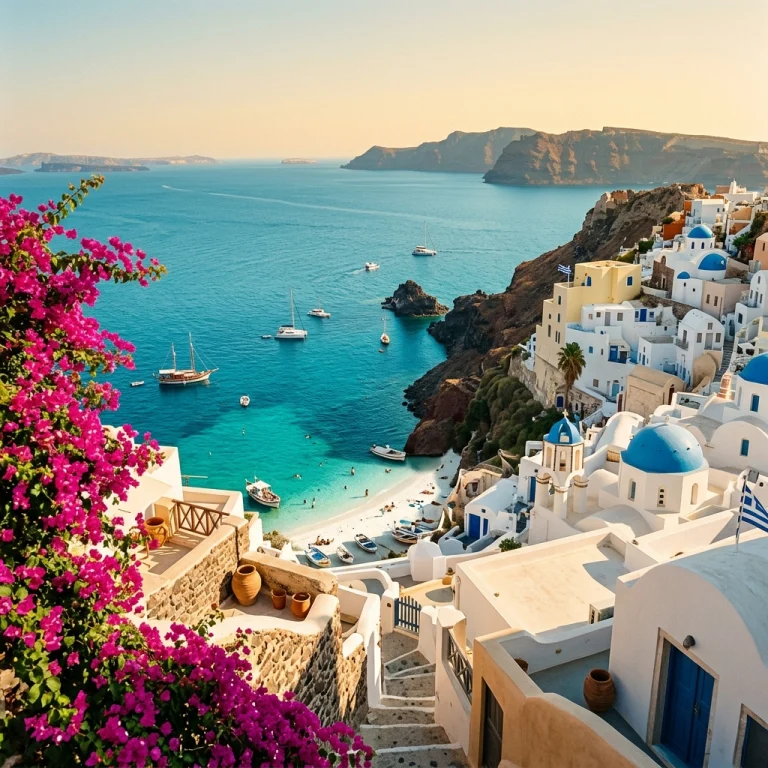
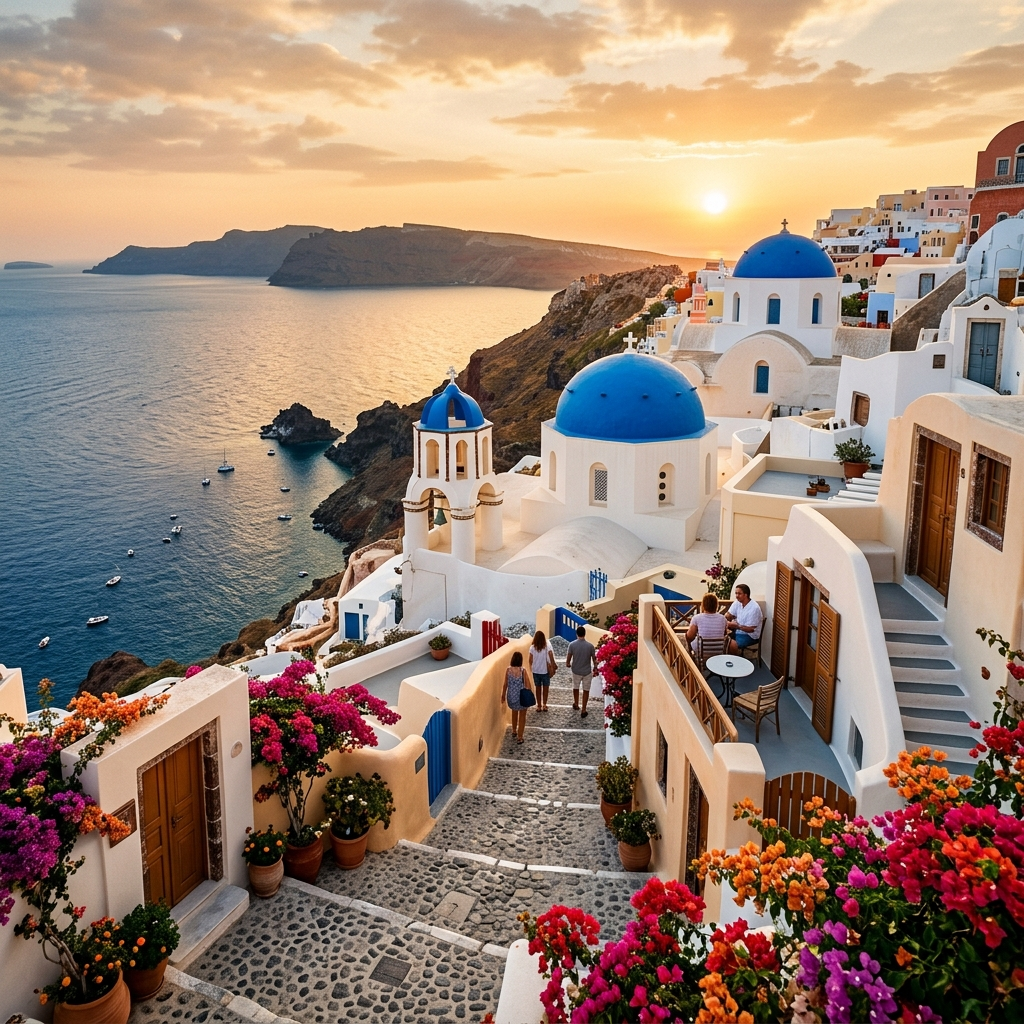
Santorini is one of the most recognizable places on the planet, and for good reason! Whitewashed homes cling to dramatic cliffs above a flooded caldera formed by a volcanic eruption 3,600 years ago, and the sunsets over the water are the stuff of postcards.
Hike the scenic trail from Fira to Oia for the best views, tour the Venetsanos winery to sample crisp assyrtiko white wine, or cruise the caldera by catamaran and soak in the volcanic hot springs. History fans shouldn’t miss Akrotiri, a Bronze Age settlement with beautifully preserved frescoes.
Santorini vs. Milos: Choose Santorini for iconic scenery, wine, and romance—just expect crowds and higher prices. Choose Milos instead if you want otherworldly beaches and volcanic landscapes without the throngs.
Mykonos: Stylish Beaches and Cosmopolitan Charm
Best for: Nightlife, beach clubs, stylish getaways
Recommended stay: 2 to 3 days
Mykonos is famous for its glamorous energy, but there’s far more here than parties. The island is home to sandy beaches, iconic windmills, whitewashed villages, and a maze-like main town made for wandering.
Stroll through Mykonos Town to the churches of Panagia Paraportiani and the waterside terraces of Little Venice, then sample local specialties like louza (Mykonian prosciutto) and honey pie. A short ferry ride away, the sacred island of Delos ranks among Greece’s most important archaeological sites.
Mykonos vs. Paros: Choose Mykonos for buzzy nightlife and see-and-be-seen beaches. Choose Paros for a more laid-back, authentic Cycladic feel at a gentler pace.
Crete: Greece’s All-in-One Island
Best for: Families, longer stays, travelers who want variety
Recommended stay: 5 to 7 days
If you only have time for one island, make it Crete! Greece’s largest island has everything—ancient ruins, mountain trails, sandy beaches, charming towns, and outstanding food. It’s big enough to feel like its own country and easily fills a week or more.
Explore the Minoan Palace of Knossos and Heraklion’s archaeological museum, then sample the island’s celebrated wine and olive oil (including a visit to the world’s oldest olive tree at Vouves). Foodies will love a tour of seaside Chania, and history buffs can take a boat trip to the fortress island of Spinalonga.
Crete vs. Naxos: Choose Crete for variety, big scenery, and a full week of activities. Choose Naxos if you want a smaller, greener, more relaxed island with excellent beaches.
Naxos: The Cyclades’ Best-Kept Secret
Best for: Families, food lovers, budget-conscious travelers
Recommended stay: 3 to 5 days
Naxos is the largest of the Cyclades, yet it stays wonderfully low-key—and it’s greener and more fertile than its glamorous neighbors. Traditional farming villages, long sandy beaches, and authentic tavernas make it a favorite for travelers who want the real Greece without the crowds.
Hike the Tragea Valley to whitewashed hill towns like Halki and Moni, admire the iconic Portara marble gateway at the Temple of Apollo, and dig into a cooking class using Naxian potatoes, honey, and cheese. It’s also a great base for catamaran trips to the tiny surrounding islands.
Milos: Lunar Beaches and Hidden Coves
Best for: Beach lovers, off-the-beaten-path travelers, geology fans
Recommended stay: 3 to 4 days
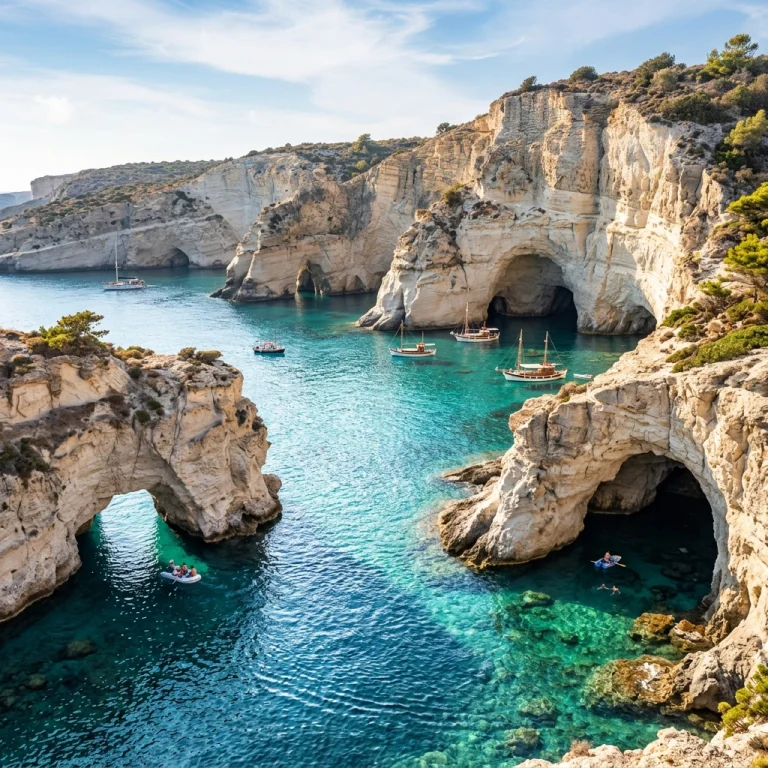
Milos feels like nowhere else in Greece! Its most famous beach, Sarakiniko, looks positively lunar, with smooth bone-white volcanic rock shaped by the sea over thousands of years. Beyond it lie multicolored rock formations, hot springs, and hidden caves scattered along the coast.
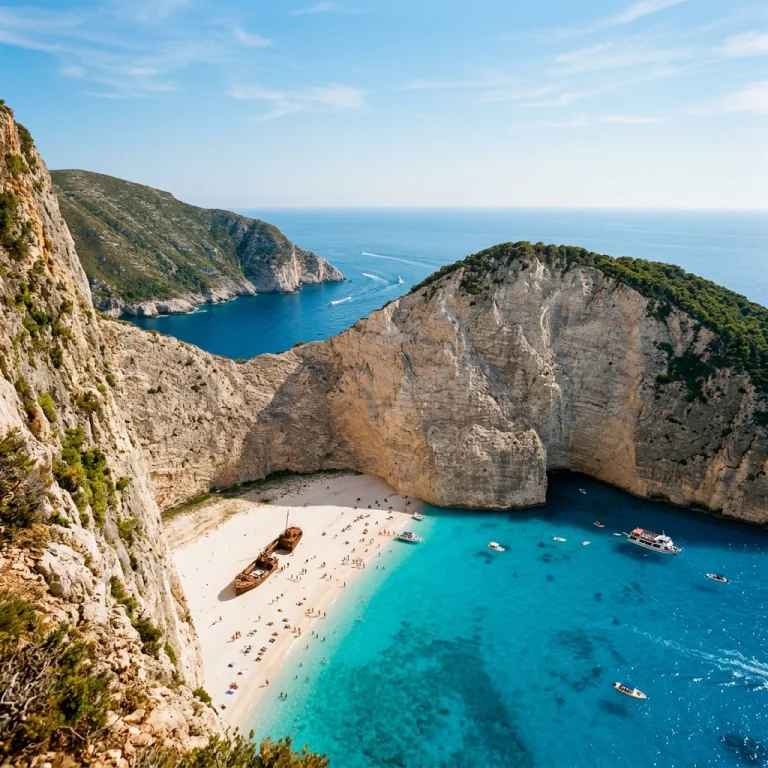
Hike the northern coast past fishing coves and red-rust caves, snorkel over a sunken shipwreck, or explore the island’s volcanic history with a local geologist. Don’t miss Klima, a colorful hillside port lined with tiny fishermen’s houses carved into the rock.
Corfu: Lush Landscapes and Venetian Charm
Best for: Green scenery, culture, relaxed island life
Recommended stay: 3 to 4 days
Set in the Ionian Sea, Corfu is one of Greece’s greenest islands, and its layered history shows in the Venetian, British, and French influences of its UNESCO-listed Old Town. Grand mansions, hidden squares, and the hilltop Old Fortress make it endlessly wander-able.
Beyond the town, rolling olive groves, pastel villages, and a coastline dotted with hidden coves await. Visit a 15th-century olive mill, hike wildflower trails to Rovinia cave, or take a boat trip to the turquoise waters of nearby Antipaxos and Paxos.
Paros: Crystalline Beaches and Marble Villages
Best for: A balanced mix of beaches, culture, and relaxed vibes
Recommended stay: 3 to 4 days
Paros is famous for its snow-white marble—archaeologists estimate that a huge share of Greek antiquities were sculpted from stone quarried here! You’ll see it in the 4th-century Church of 100 Doors (Ekatontapiliani) and in ancient temple pillars visible beneath a glass floor.
Beyond the ruins, Paros charms with cubist whitewashed villages, long crystalline beaches, and pretty ports like Naousa. A short ferry ride reaches twin island Antiparos, known for its dramatic stalactite cave. Wine lovers can tour the island’s oldest winery for a tasting paired with Cycladic cheeses.
When Is the Best Time to Visit Greece?
The best time to visit Greece is generally late spring (May to June) and early fall (September to October), when the weather is warm, the sea is swimmable, and the biggest summer crowds have thinned. July and August bring the hottest temperatures and the busiest beaches, ideal for peak nightlife but less relaxing at popular spots like Santorini.
If you’re focused on ancient sites and mainland destinations like Athens, Delphi, and Meteora, the shoulder seasons are especially pleasant, as many sites offer little shade during the summer heat.
Which Greek Destinations Work Well Together?
Some destinations pair beautifully for a single trip:
- Athens + Santorini + Mykonos: The classic first-timer’s route mixing history and iconic islands.
- Athens + Nafplio + Delphi: A history-focused mainland loop with easy travel times.
- Crete on its own: Big enough to fill an entire week without ferries.
- Naxos + Paros + Milos: A relaxed Cycladic island-hopping trio away from the biggest crowds.
- Corfu + mainland Greece: Pair lush Ionian scenery with ancient sites.
Frequently Asked Questions
What are the best places to visit in Greece for first-time visitors?
For a first trip, combine Athens with one or two islands. Athens covers the essential ancient history, while Santorini and Mykonos deliver the iconic island scenery most travelers picture. Add Crete or Naxos if you have extra time and want more variety.
Which Greek island is best for beaches?
Milos stands out for its unusual volcanic beaches like Sarakiniko, while Naxos offers long, sandy, family-friendly stretches. Crete has an enormous variety of beaches thanks to its size, making it a strong all-rounder for beach lovers.
What are the best places to visit in Greece besides Santorini?
If you want Santorini’s beauty without the crowds, try Milos for dramatic volcanic landscapes, Naxos for relaxed beaches and villages, or Paros for a balanced mix of everything. Corfu is a lush, greener alternative in the Ionian Sea.
How many days do you need in Greece?
Most travelers spend 7 to 10 days in Greece, which is enough to combine Athens with two or three other destinations. Two weeks lets you island-hop more slowly or add a longer stay on a large island like Crete.
What are the best cities to visit in Greece?
Athens is the must-see city for ancient history and food, while Thessaloniki offers a rich, less-crowded mix of Roman, Byzantine, and Ottoman heritage. Smaller historic towns like Nafplio are also well worth a visit.
Which Greek islands are less crowded?
Milos, Naxos, and Paros tend to be quieter than Santorini and Mykonos, while still offering beautiful beaches, good food, and plenty to do. They’re ideal for travelers seeking a more relaxed, authentic island experience.
Choosing the Right Greece Trip for You
The beauty of Greece is that there’s no single “right” way to visit—it all comes down to what you love most! History lovers should anchor their trip around Athens, Delphi, and Meteora. Beach seekers will find their happy place on Milos, Naxos, or Crete. Couples can chase sunsets in Santorini, while anyone craving a quieter, more authentic experience should look to the lesser-known islands and mainland towns.
Match your destinations to your interests, your available time, and the season, and you’ll come home with a Greek adventure you’ll never forget!